
Hard water in Ozarks homes
Guide · Ozarks Homes
Dissolved limestone in Ozarks water leaves spots on glasses and crust on shower heads, and it can wear out a water heater early.
By Joe Messina, Master Plumber
Or Request a Callback- License
- Master Plumber #BTC-0004081
- Hours
- 8am to 8pm every day, emergency line 24/7
- 4.8 stars, 264 reviews
Why our water is hard
The rock under the Ozarks is mostly limestone and dolomite. Rain soaks down through that rock and picks up calcium and magnesium, and those minerals come out of your tap. The hardness itself isn't a health concern. The minerals still wear on your plumbing and appliances.
The symptom checklist
- White spots on glasses and silverware out of the dishwasher.
- Crust on faucet aerators and shower heads, and a shower door that fogs with scale.
- Soap that won't lather and a filmy feel after rinsing.
- Towels and laundry that come out stiff.
- A popping, rumbling water heater, or one that didn't last.
- Appliances that heat water, like dishwashers and some washing machines, wearing out early.
White crust on a shower head is hardness scale, the calcium and magnesium left behind as the water dries. A test will tell you how hard your water is.
What it does where you can't see
Scale builds up where water gets heated or dries. In the water heater it settles as sediment. Valves and cartridges start to stick, and supply lines and fixtures slowly narrow. On a gas water heater the burner has to heat through that layer, so it burns more gas for the same hot water. On an electric one, scale on the elements makes them run hotter and burn out sooner.
How to find out how hard your water is
On Springfield city water, City Utilities' 2025 water quality report puts the average at 8.1 grains per gallon, with a range of 4.3 to 12.0. On the USGS scale, anything over 7 grains, about 120 milligrams per liter, counts as hard. Other towns publish a yearly report too. A cheap test strip kit from any hardware store gives you a usable number in minutes. On a well, nobody tests the water but you. A lab test tells you what you're treating, and the CDC says to test a private well at least once a year for bacteria, nitrates, dissolved solids and pH. Text us the number, or a photo of the crustiest fixture in the house.
Which fix addresses which problem
- Vinegar and elbow grease remove visible scale from a shower head. It's cheap and it gets that fixture flowing again, but the minerals stay in the water and the crust comes back.
- A water softener treats the whole house at the point the water enters. It stops new scale on fixtures and in the water heater, and it helps with stiff laundry and appliance wear. On a well with sand or grit, put a sediment filter ahead of it. Of the three, it's the one that protects the pipes and fixtures themselves.
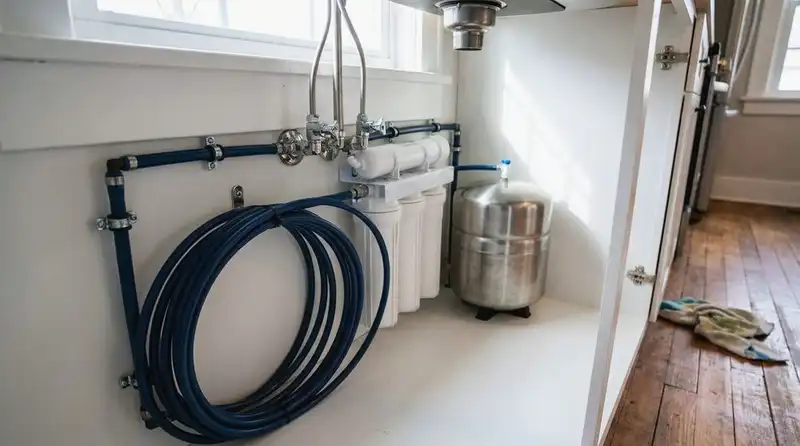
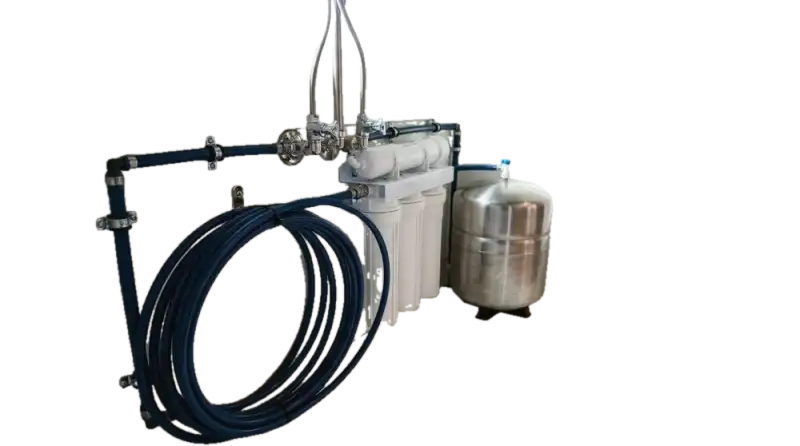
- Reverse osmosis treats the water you drink at one tap. It takes out most of what's dissolved in the water. You'd run it alongside a softener, since it only covers that faucet. Details on the filtration page.
Which one is worth it depends on your water and what's bothering you. If it's only spots and crust, vinegar handles those, but it won't touch the sediment in the water heater. Rheem recommends flushing the tank every six months on hard water, and if yours is old and has never been flushed, read the water heater noise guide before you drain it. Softened water carries a little added sodium, so if anyone in the house is on a low sodium diet, the reverse osmosis tap takes most of it out. A softener can also run on potassium chloride instead of regular salt, but Health Canada says people with kidney or heart disease, high blood pressure or diabetes, or who take medicine that affects potassium, should avoid drinking water softened that way.
Talk to Joe about it
Call and a master licensed plumber picks up the phone. Or text a photo and get a first read on what you're looking at.
Or Text a Photo of the Problem24/7 emergency plumbing and mechanical service
- For a leak or burst pipe, while you wait:
- 1Shut off the main water valve, usually where the line enters the house
- 2Open the lowest faucet to relieve the pressure
- 3Move what you can out from under the leak